
10 Common lawn weeds in Minnesota and how to manage them
In Minnesota, maintaining a pristine lawn is a seasonal battle. Between the spring thaw and the first hard frost, homeowners across the Twin Cities face a parade of volunteer plants that seem determined to take over. But not all "weeds" are created equal. Some are aggressive invaders that choke out your grass, while others are merely misunderstood wildflowers that actually help the soil.
Effective management starts with identification. Here is a breakdown of the 10 most common lawn weeds in Minnesota, when to look for them, and how to handle them—whether you prefer pulling them by hand or calling in the pros.
1. Dandelion (Taraxacum officinale)
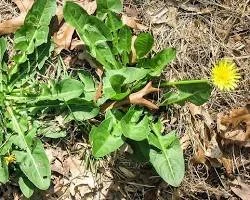
When it comes up: Early spring blooms, but the plant persists through fall.
Why it is disruptive: Their deep taproots steal water and nutrients from surrounding grass, and their fluffy seed heads spread rapidly to neighbors' yards.
How to identify: Look for the iconic bright yellow flower head, hollow stems with milky sap, and jagged, lance-shaped leaves at the base.
The Good & The Bad: Dandelions are actually beneficial for early-season pollinators like bees. However, in a manicured lawn, they can quickly become an eyesore.
How to remove:
Eco-Friendly: Use a hand weeder (like a "grandpa's weeder") to pull the entire taproot. If the root snaps, it will grow back.
Monson Method: Professional spot treatment in the fall is most effective, as the weed draws the herbicide down into the root system to survive winter.
2. Crabgrass (Digitaria)
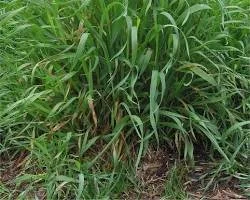
When it comes up: Late spring/early summer when soil temperatures rise.
Why it is disruptive: It’s an opportunistic annual grass that thrives in heat and drought, rapidly filling in thin or bare spots in your lawn. It dies in winter but leaves behind thousands of seeds for next year.
How to identify: It grows in a flat, star-shaped clump low to the ground with wide grass blades.
The Good & The Bad: There isn't much "good" here; it’s a sign of a thin lawn that needs thickening.
How to remove:
Eco-Friendly: Keep your lawn mowed high (3 inches) to shade the soil and prevent seeds from germinating. Hand-pulling works if caught early before it seeds.
Monson Method: A pre-emergent herbicide applied in early spring prevents the seeds from ever sprouting.
3. Creeping Charlie (Glechoma hederacea)
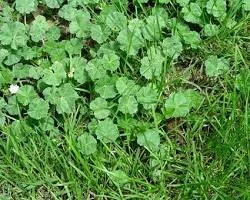
When it comes up: Blooms in spring (purple flowers), spreads actively spring through fall.
Why it is disruptive: This aggressive member of the mint family spreads via "runners" (stolons) that form a dense mat, choking out grass completely. It loves shade and moisture.
How to identify: Scalloped, kidney-shaped leaves with a distinct minty smell when crushed. Small, tube-like purple flowers appear in spring.
The Good & The Bad: It smells nice when mowed and provides nectar, but it is incredibly invasive and difficult to stop once established.
How to remove:
Eco-Friendly: Hand-pulling is difficult as every broken piece of stem can re-root. Improving sunlight and drainage helps discourage it.
Monson Method: Chemical control is often necessary for Creeping Charlie. We use specialized selective herbicides, applied ideally in the fall when the plant is storing energy for winter.
4. White Clover (Trifolium repens)
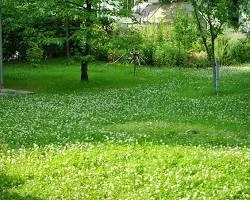
When it comes up: Spring through fall.
Why it is disruptive: It breaks up the uniform texture of a lawn and attracts bees, which can be a concern for barefoot children or those with allergies.
How to identify: The classic three-leaf (sometimes four!) structure with white, ball-shaped flowers.
The Good & The Bad: Clover is a legume, meaning it pulls nitrogen from the air and adds it to the soil, naturally fertilizing your lawn. Many homeowners now choose to leave it be.
How to remove:
Eco-Friendly: High nitrogen fertilizer discourages clover, which thrives in nitrogen-poor soil.
Monson Method: Standard broadleaf weed control handles clover easily if you prefer a pure grass aesthetic.
5. Broadleaf Plantain (Plantago major)
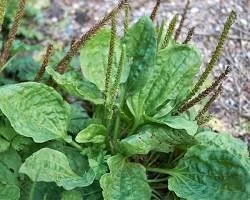
When it comes up: Summer.
Why it is disruptive: Its large, flat leaves block sunlight, killing the grass underneath. It is often an indicator of compacted soil.
How to identify: A low-growing rosette of large, oval, spoon-shaped leaves with prominent parallel veins.
The Good & The Bad: It has historical medicinal uses for bug bites, but generally indicates your lawn needs aeration.
How to remove:
Eco-Friendly: The shallow roots make it easy to pull by hand. Aerating your lawn will make the soil less hospitable to it.
Monson Method: We recommend core aeration services to fix the underlying soil compaction, paired with spot treatment.
6. Quackgrass (Elymus repens)
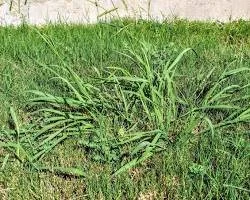
When it comes up: Early spring (cool-season perennial).
Why it is disruptive: It looks like coarse, ugly grass and grows much faster than your actual lawn. It spreads via aggressive underground rhizomes.
How to identify: Wider blades than Kentucky Bluegrass, often with clasping "auricles" (little hooks) where the blade meets the stem.
The Good & The Bad: There is very little upside; it is one of the hardest weeds to kill because it is biologically a grass.
How to remove:
Eco-Friendly: Digging it out is very hard; you must get every rhizome or it returns.
Monson Method: Selective herbicides generally don't work. We often have to apply a non-selective treatment (like glyphosate) to the specific patch and then re-sod or re-seed that area.
7. Canada Thistle (Cirsium arvense)
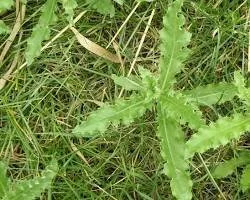
When it comes up: Spring and Summer.
Why it is disruptive: It is prickly and painful to step on. It is also a "noxious weed" in Minnesota, meaning you are legally encouraged to control it to prevent agricultural spread.
How to identify: Spiny, jagged leaves with purple flower tufts. It grows vertically and can get quite tall if ignored.
The Good & The Bad: Birds love the seeds, but the plant is too aggressive and painful for a residential lawn.
How to remove:
Eco-Friendly: Repeatedly cutting it down at the soil level eventually exhausts the root system, but it takes patience.
Monson Method: Systemic herbicide application is the most efficient way to kill the deep taproot without damaging the surrounding lawn.
8. Common Purslane (Portulaca oleracea)
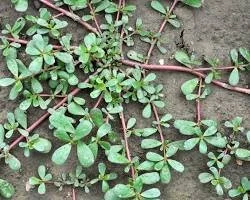
When it comes up: Late spring/Summer (loves heat).
Why it is disruptive: A succulent that forms a thick, sprawling mat. It can re-root even after being pulled if left on the soil.
How to identify: Reddish stems with fleshy, tear-drop shaped succulent leaves. Small yellow flowers.
The Good & The Bad: It is actually edible and high in Omega-3s! However, it usually signals thin turf.
How to remove:
Eco-Friendly: Hand-pulling is effective, but you must bag the weeds immediately. Do not leave them on the lawn.
Monson Method: A thick, healthy lawn is the best defense. Our fertilizer programs help your grass outcompete this succulent.
9. Black Medic (Medicago lupulina)
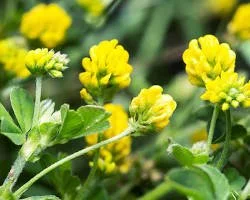
When it comes up: Late spring/Summer.
Why it is disruptive: It forms sprawling mats that smother grass. Like plantain, it loves compacted soil.
How to identify: Often confused with clover, but it has yellow flowers and the center leaflet is on a slightly longer stalk.
The Good & The Bad: It fixes nitrogen like clover, but is generally seen as a sign of poor soil health.
How to remove:
Eco-Friendly: It has a taproot but pulls up relatively easily. Fix the soil compaction to prevent return.
Monson Method: A combination of broadleaf weed control and fall aeration.
10. Yellow Wood Sorrel / Oxalis (Oxalis stricta)
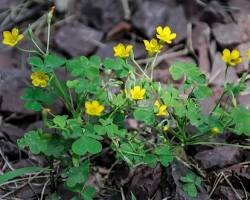
When it comes up: Spring and Summer.
Why it is disruptive: It is a prolific seeder. When the seed pods dry, they explode, launching seeds several feet away.
How to identify: Looks like clover but with distinct heart-shaped leaves and small, 5-petaled yellow flowers.
The Good & The Bad: The leaves have a lemony tang (edible in small amounts), but it spreads aggressively in thin lawns.
How to remove:
Eco-Friendly: Hand pull before the yellow flowers turn into seed pods.
Monson Method: Professional pre-emergents and post-emergent treatments are effective in keeping Oxalis under control.
Struggling with a Weedy Lawn? Let's Talk.
You don't have to spend your summer on your hands and knees pulling weeds. Whether you want a perfectly manicured golf-course lawn or just want to keep the "bad" weeds like Thistle and Creeping Charlie at bay, Monson Lawn & Landscape has a plan for you. We offer comprehensive fertilizer and weed control packages, as well as aeration services to get to the root of the problem.